
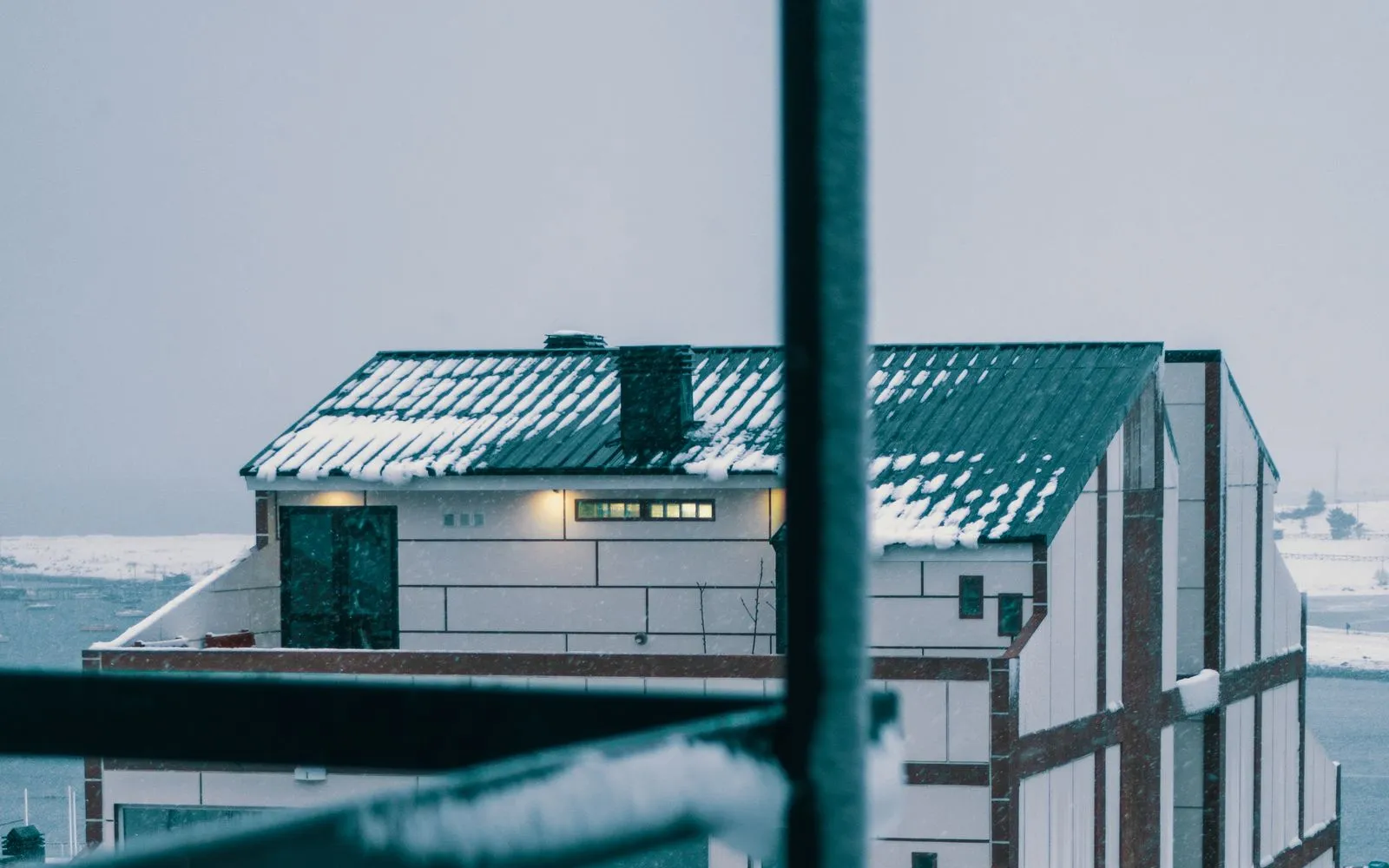
Every winter we climb into attics around Cache Valley and Franklin County and find the same thing: frost on the underside of the roof deck, damp insulation, rusty nail tips, or dark staining on the plywood. The homeowner usually called us because they saw a water spot on the ceiling and assumed the roof was leaking.
Sometimes it is a leak. Often it isn't. It's moisture from inside the house that got into the attic and had nowhere to go.
Where we live matters: Climate Zone 6B
Building codes split the country into climate zones based on how cold and how wet a place is. Every county we serve (Cache, Box Elder and Rich counties in Utah, and Franklin, Oneida and Bear Lake counties in Idaho) is in Climate Zone 6B. The "6" means cold, with long heating seasons. The "B" means dry outside air.
That combination is the whole story. In winter, the air inside your home is warm and holds a lot more moisture than the cold, dry air outside. Cooking, showers, laundry, houseplants and just breathing add more. Physics pushes that warm, moist air toward the cold side of the house, which for most homes means up into the attic.
How moisture gets into the attic
Warm indoor air rises and leaks into the attic through any gap in the ceiling:
- Recessed can lights and light fixture boxes
- The attic hatch or pull-down stairs
- Gaps around plumbing vent pipes, chimneys and wiring holes
- Top plates of interior walls
- Bathroom fans that dump into the attic instead of venting outside
When that air hits the cold underside of the roof deck, the moisture condenses. On really cold nights it freezes into frost. When the sun comes out or the weather warms up, the frost melts all at once and drips onto the insulation and ceiling. That's the "leak" people call us about.
Vapor barrier vs. vapor retarder (and why the words matter)
Most people have heard of a "vapor barrier." In the building code, the official term is actually vapor retarder. It's a material that slows moisture moving through a wall or ceiling. Codes rate them in three classes, from plastic sheeting and foil (which let almost nothing through) down to kraft-faced insulation and ordinary latex paint (which slow moisture but still let some pass).
In cold climates like ours, the code generally calls for a vapor retarder on the warm, interior side of exterior walls. The details depend on how the wall is built, so your local building department and the code they've adopted have the final say.
For your roof, the takeaway is simpler. Stopping moisture is not just about a sheet of plastic. It's about stopping air leaks into the attic, and then making sure the attic can dry out whatever moisture still gets up there.
What actually fixes attic moisture
1. Seal the ceiling
The biggest source of attic moisture is air leaking up from the living space. Sealing the gaps listed above (the hatch, can lights, pipe and wire penetrations) cuts off most of the problem. This is usually insulation or general contractor work, and we'll point it out when we see it.
2. Vent bathroom and kitchen fans outside
A bath fan that blows into the attic is basically a moisture hose. Every fan should run through a duct to a proper roof or wall vent. When we replace a roof, we check where every fan goes and fix the roof side of it.
3. Balanced attic ventilation
This is where the roof comes in. A healthy attic breathes: cold, dry outside air comes in low at the soffits (intake) and warm, moist air leaves high at the ridge or roof vents (exhaust). When intake and exhaust are balanced, moisture gets carried out before it can condense.
Common problems we find:
- Soffit vents painted over or blocked by insulation
- Plenty of exhaust but almost no intake, which can actually pull conditioned air out of the house
- Mixing different exhaust types on the same roof, which can short-circuit the airflow
- Old roofs with one or two small box vents for a large attic
We're Lomanco certified and plan the ventilation on every roof we install, so intake and exhaust actually match the size of the attic. It's one of the most important parts of a roof in our climate, and one of the easiest to get wrong.
4. Keep the attic cold in winter
A properly insulated and ventilated attic should stay close to outdoor temperature in winter. That keeps snow from melting off the roof and refreezing at the eaves, so it also helps prevent ice dams. (We wrote more about ice dams in Ice Dams and Attic Ventilation.)

Signs your attic has a moisture problem
- Frost or ice on roof nails or the underside of the decking in winter
- Water spots on the ceiling after a cold snap, especially near exterior walls
- Dark staining or mold on rafters or plywood
- Damp, matted insulation
- Ice dams or long icicles along the eaves
- Musty smell in upstairs rooms
Why it matters for your roof
Trapped moisture rots roof decking, rusts fasteners, ruins insulation and can grow mold. It can also cut the life of new shingles short. Roof manufacturers expect proper ventilation, and poor ventilation can affect warranty coverage. A new roof on a wet attic is a new roof that won't last as long as it should.
Not sure what's going on in your attic?
If you're seeing frost, ceiling spots or ice dams, we'll come take a look. Our roof inspections are free, and we'll check the attic, the ventilation, and where your fans are venting, then tell you honestly whether the fix is a roof issue or something else.
Call White Pine Roofing at (435) 512-8741 or request a free inspection.
We serve Logan, Smithfield, Hyrum, Preston, Franklin, Tremonton, Malad, Bear Lake and the towns in between. See all areas we serve.
Further reading: Stephen Carr, "'Back When' a Vapor Barrier Was a Vapor Barrier," CodeWatcher, January 2017. Climate zone assignments are from the IECC county list.
FAQ
What climate zone is Cache Valley in?
Cache County, Utah, and the surrounding counties we serve in Utah and Idaho are in IECC Climate Zone 6B: cold winters with dry outside air.
Is frost in my attic normal?
A little frost on an extremely cold night can happen, but regular frost on the decking or nails means warm, moist air is getting into the attic and isn't being vented out. It's worth having checked.
Will a new roof fix attic condensation?
Only if the ventilation is fixed too, and ideally the ceiling air leaks. New shingles alone won't stop moisture coming from inside the house.
Should my bathroom fan vent into the attic?
No. Bath and kitchen fans should be ducted all the way outside through a roof or wall vent.